
June 11, 2026

Owning a second home in Quogue should feel like a pleasure, not a long-distance guessing game. If you are hours away, small issues can turn into expensive ones fast, especially in a coastal village where storms, flood exposure, exterior maintenance, and permit rules all matter. The good news is that with the right local systems in place, you can protect your property, stay organized, and make remote ownership far more manageable. Let’s dive in.
Quogue’s setting is part of its appeal, but it also comes with real operating demands. Suffolk County identifies Long Island’s south shore as vulnerable to coastal hazards and storms, and its emergency materials note that Superstorm Sandy impacted more than 31,000 flooded homes.
That context matters if you are not on-site year-round. The Village of Quogue also incorporates the New York State Fire Prevention and Building Code and FEMA flood-hazard mapping into its local code framework, which means flood-zone review and code compliance should be part of your regular ownership plan.
New York State adds another important point for second-home owners: flood damage is usually not covered by a standard homeowners policy. Hurricane season begins June 1, so waiting until a storm is in the forecast is rarely the best time to get organized.
If you want your Quogue home to run smoothly from afar, begin by naming one trusted local decision-maker and one backup. That person should be able to receive alerts, access the property, authorize vendors, and make time-sensitive calls if weather or maintenance issues come up.
New York State recommends designating a central point of contact, and Suffolk County’s alert systems are built to send messages directly to homes and businesses. For a remote owner, this creates a simple but critical communication chain when every hour counts.
A practical local point person should be ready to:
This role does not have to be complicated, but it does need to be clear. When responsibilities are vague, response times often slow down.
One of the smartest things you can do as a remote owner is create a single, current property file before you need it. This file should help you answer ownership, compliance, insurance, and maintenance questions quickly.
In Quogue, that documentation can be especially important. The village’s certificate of occupancy instructions reference items such as an up-to-date sealed survey, copies of CO or COO records, proof of a recent deed transfer if applicable, any open building permits to be finalized, a correct house number, an electrical compliance certificate for pool equipment, and a smoke and carbon monoxide alarm affidavit.
Your file should include copies of:
This kind of file also supports future work. Quogue’s septic guidance and Suffolk County septic-grant materials show that applications may require records such as a deed, valid CO, tax bill, survey, proof of insurance, proof of system failure, and possibly coastal or wetlands permits.
A second home in Quogue should not be checked only when something goes wrong. A repeatable inspection rhythm is what helps you catch issues early, preserve condition, and stay ahead of weather-related problems.
A practical cadence is weekly or biweekly checks during the active season, monthly checks in the off-season, plus more detailed reviews in spring and fall. You should also plan for an immediate post-storm inspection after significant weather.
That schedule makes sense in a coastal market like Quogue. It lines up with Suffolk County’s hazard profile, local property-maintenance expectations, and New York storm-preparedness guidance that encourages owners to inspect trees, clear gutters and downspouts, trim dead wood, secure loose exterior items, and know how to turn off utilities.
Routine checks should cover:
Consistency matters more than perfection. A reliable checklist often prevents the expensive surprises that happen when homes sit unattended too long.
Remote ownership works better when vendors are organized by home system rather than called one at a time as issues appear. In Quogue, a strong roster usually includes landscaping, housekeeping, HVAC, plumbing, pest control, pool care, generator service, septic service, and general repair support.
This matters for both upkeep and compliance. The Town of Southampton says contractors performing home improvement work need a Home Improvement Contractor’s License, and Quogue’s fencing guidance requires permits as well as contractor license and workers’ compensation documentation for fences, arbors, gates, and driveway gates.
In Quogue, exterior work is not always as simple as hiring the nearest available vendor. Permit requirements can apply to projects that owners often assume are minor.
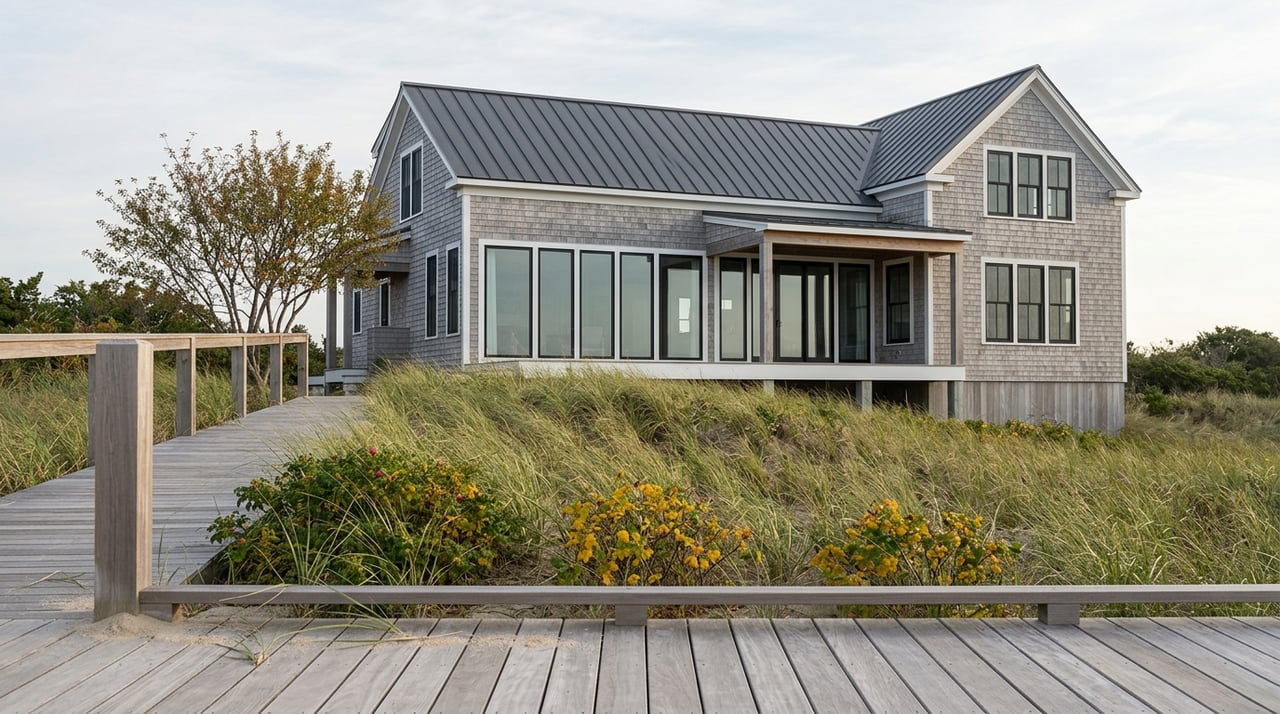
The village’s forms and guidance show that building permits, septic upgrade materials, pool-fence rules, gas supply line certification, certified electrical inspectors, and updated CO paperwork are all part of the local compliance picture. If your property is near the water, shoreline-adjacent work may also require additional review under coastal erosion rules, and Quogue includes permit materials for dune walkways and walkway-to-water specifications.
Landscaping in Quogue is not just about curb appeal. It is also part of property maintenance, safety, and emergency access.
Quogue’s property-maintenance law requires owners to control trees, bushes, brush, grass, hedges, and weeds and keep landscaping trimmed so it does not become overgrown. The code also requires trimming around driveways and private roads so emergency vehicles can access the property, and it regulates corner sightlines in certain setback areas.
For a remote owner, this means landscaping should be managed on a schedule, not only before summer arrivals or holiday weekends. It should also be reviewed after storms and during periods of rapid growth.
In Quogue, septic care deserves year-round attention. The Town of Southampton says nearly every home uses an individual septic tank and or cesspool, and regular pumping of sludge and scum is necessary.
Poorly maintained systems can leak pathogens and nutrients into groundwater and surface waters. For owners who are not on-site often, that is exactly why septic should be treated as a standing stewardship item rather than a one-time repair issue.
Suffolk County’s 2026 septic materials say nearly 70% of county homes use cesspools or septic systems. The county’s SIP grants can provide up to $20,000 per property, and the New York State SSRP can provide up to $25,000. Southampton Town also says its current I/A OWTS Rebate Program has a maximum town rebate of $20,000 for eligible projects, and grant-funded systems require annual professional maintenance.
Keep a simple log of:
This is one of the clearest examples of why local oversight matters. Good records and timely service are much easier to manage before there is a failure.
Insurance should be reviewed as part of annual home stewardship, not only after damage occurs. New York DFS recommends reviewing coverage every year, maintaining a home inventory, and storing important documents in a waterproof container or off-site.
For Quogue owners, two details are especially important. DFS notes that hurricane deductibles are common in Nassau and Suffolk counties and are often 1% to 5% of dwelling coverage, and flood insurance is mandatory for some mortgaged homes in high-risk flood areas and normally has a 30-day waiting period.
In practical terms, that means you should not assume your standard homeowners policy covers flood losses. Photos, dated inspection notes, invoices, receipts, and permit records can also help support claims by showing the home’s condition and timeline before and after an event.
Storm planning works best when it becomes part of your annual routine. New York’s hurricane guidance recommends clearing gutters and downspouts, trimming dead wood, securing outdoor items, charging devices, knowing how to shut off water, gas, and electricity, and planning for evacuation if officials issue an order.
Suffolk County emergency tools can support that effort. Owners and local contacts should be enrolled in Suffolk Alert, and New York State also recommends NY-Alert along with a designated central contact person.
A seasonal storm plan should spell out who does what, when the property is checked, which vendors are called first, and where key records are stored. For second-home owners, peace of mind usually comes from process, not guesswork.
If you want your Quogue second home to stay ready, protected, and well documented, focus on a few core systems. Assign a local point person, organize your records, inspect on a fixed schedule, coordinate licensed vendors, keep septic and exterior maintenance on track, and review insurance before storm season.
That kind of structure helps you protect both enjoyment and long-term value. It also makes ownership less reactive, which is often the biggest challenge when you are managing a property from afar.
For owners who want more consistent oversight, Stoebe & Co.’s property-management concierge arrangement includes weekly home checks, seasonal maintenance, a 15-point home review, 24/7 emergency response, vendor and subcontractor management, and repair and maintenance services. If you want a local team that understands Quogue-area second-home ownership and can help you stay ahead of the details, connect with Stoebe & Co..

Stoebe & Co. Real Estate is a premier, independently owned brokerage located in the prestigious Village of Westhampton Beach. With over $1 billion in sales, the firm has established itself as a leader across the primary, luxury, ultra-luxury, rental, and commercial markets. Our growth is the result of a deliberate approach to real estate — one defined by clarity, precision, and purpose.

October 22, 2026
October 15, 2026

October 8, 2026
October 8, 2026
October 8, 2026
October 1, 2026
September 17, 2026
September 17, 2026

September 10, 2026