
August 27, 2026
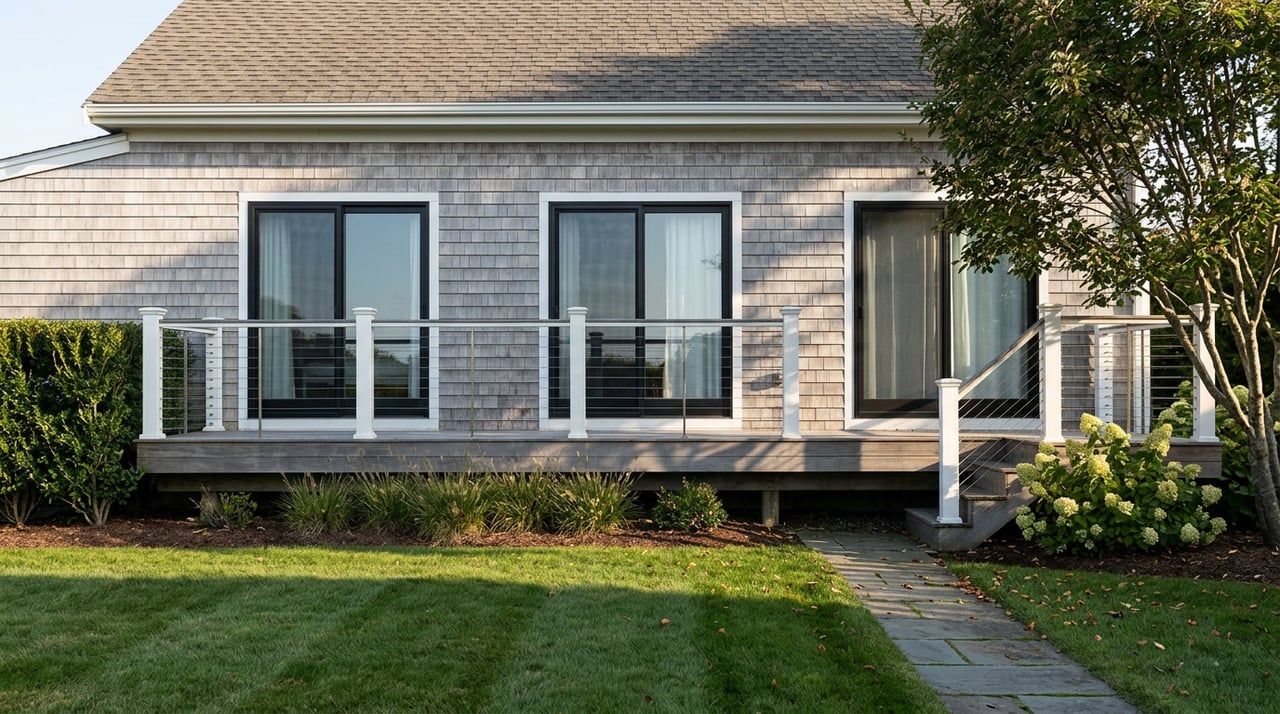
A buyer closes on a shingled house two blocks from Quogue Village Beach in April, already penciling in the summer rental income that will cover the carrying costs. Then the closing attorney mentions the paperwork: a rental license from the village, a cap of six rentals a year, no more than four of them between Memorial Day and Labor Day, and a fourteen-day minimum on every lease. The buyer had budgeted for weekly turnover. Quogue's code has other plans.
That gap between what a buyer assumes and what the village actually allows is the whole story here. Most rental-market content treats zoning caps as fine print to route around. In Quogue, the cap is not an obstacle between an investor and the market. It is the market. It sets how much income a single rental week has to carry, how much staffing a property needs, and how different this village's economics are from Westhampton Beach two exits down Montauk Highway, where the rules run almost opposite.
Quogue's Village Code is specific rather than aspirational. Chapter 149 requires a rental license from the Village Administrator before any one-family dwelling can be rented at all, and the license comes with a hard ceiling: no more than six rentals in a calendar year, and no more than four of those between Memorial Day and Labor Day. Layered on top of that frequency cap is a duration floor. A lease shorter than fourteen consecutive days is barred outright under a separate zoning section, and a home rented for less than fourteen days can't be licensed as a rental at all, no matter how the owner structures the paperwork.
The code closes a few obvious workarounds too. The entire dwelling has to be rented, not a floor, not a guest suite, not a room. Occupancy is capped at two people per conventional bedroom. And if an owner wants more than six rentals in a year, the only path is a formal appeal to the Board of Trustees, not a quiet workaround on a booking site.
None of this is buried in an obscure filing. It's printed on the village's own rental application, the same document every prospective landlord has to sign before renting a single week.
Quogue's cap stopped being an outlier this summer. On June 11, 2026, the West Hampton Dunes Village Board voted to limit homeowners to five two-week-minimum rental periods a year, a new restriction in a village that previously had none. Mayor Irwin Krasnow framed it as an effort to rein in short-term rentals that residents believe bring more turnover and more disruption than the village wants. Not everyone welcomed it. Harry Grant, who rents out homes he built in the Dunes, called the rentals his family's livelihood and pushed back on the board's reasoning. Fred Gerlach, a Dune Road resident, argued the village isn't the party scene it was in decades past, even as he stopped short of opposing some kind of limit.
The vote put West Hampton Dunes in the middle of a patchwork that already existed up and down the South Fork, and Dan's Papers laid it out village by village. East Hampton, Sag Harbor, and Sagaponack all limit homeowners to two two-week rental spans a year, though owners in those villages can offer unlimited thirty-day-plus rentals on top of that. North Haven has no cap at all. Greenport caps neither frequency nor duration. Southampton Village allows unlimited two-week rentals but only two one-week rentals annually. Westhampton Beach Village takes a different approach entirely, limiting owners to 120 rental-days total between May and September, with no minimum stay required on any individual booking.
Set next to that list, Quogue's rule is one of the tightest on the map. It is also one of the clearest, because it doesn't ration by total days. It rations by number of leases, which changes the math for anyone trying to plan a season.
Westhampton Beach's system optimizes for volume. A 120-day allowance with no minimum stay means an owner can, in theory, run a five-month season of short bookings, weekend to weekend, chasing whatever the calendar will fill. Quogue's system does the opposite. Six leases, four of them in summer, each at least fourteen days, means an owner isn't filling a calendar. They're filling six specific windows, and each one has to be worth renting the whole house for two weeks rather than splitting it across four separate weekend bookings.
That structural difference shows up in how hard it is to even measure the Westhampton Beach short-term market with any confidence. Two of the more established short-term rental data platforms, AirDNA and Rabbu, both track Westhampton Beach and arrive at very different pictures of it. AirDNA's most recent figures put the market at 176 active listings, 46 percent occupancy, and average annual revenue near $65,900, up 14.5 percent year over year through June 2026. Rabbu's data, pulled the same year, shows just 29 active listings, occupancy closer to 9 percent, and average revenue around $67,200 against an average home value of $3.83 million. The two firms are not disagreeing about which decimal point to use. They're describing markets that barely resemble each other, which is what happens when a village's own rules allow such a wide range of rental behavior that no single snapshot captures it.
Rabbu's month-by-month numbers make the underlying shape clearer regardless of which top-line figure is closer to reality. August alone averages $19,472 in revenue, July $16,380, June $8,660. May and September, the shoulder months, bring in $5,226 and $6,422. Everything from October through April falls below $2,700 a month, bottoming out near $871 in January. Under a system with no minimum stay and 120 available days, an owner's entire year rides on capturing as much of that June-through-September window as possible, one short booking at a time.
Quogue doesn't publish comparable short-term rental data, and that's not an oversight. A 14-day minimum and a six-rental annual cap mean there isn't a comparable short-term market to track in the first place. What exists instead is a small number of long bookings, which shifts the entire question an owner has to ask. It's not "how many nights can I fill," it's "what does each of my six windows need to earn, and who is willing to commit to two weeks at a time to make that number work."
Whatever a village allows, Suffolk County adds its own layer on top. Since June 1, 2023, the county's hotel and motel occupancy tax has applied at 5.5 percent to any stay under 30 days, a rate that doubled from the previous 3 percent. That tax reaches bed and breakfasts, guest houses, and any one-family home rented short-term, not just traditional lodging. Owners have to register with the county within ten days of their first rental, obtain a Certificate of Authority, and file quarterly returns whether or not the property earned anything that quarter.
Because Quogue's minimum stay is fourteen days, every rental an owner runs there still falls under that 30-day threshold and still owes the county tax. Westhampton Beach's shorter, more frequent bookings owe the same tax on each one. The village-level rules decide how often you can rent and for how long. The county decides that whatever you collect along the way, a slice of it belongs to Suffolk County regardless of which village line the house sits on.
An investor who wants a smaller number of higher-value leases, fewer tenant turnovers, and a property that mostly runs itself outside of two or three managed windows a year is better matched to Quogue's structure than fighting against it. An investor chasing occupancy across a full summer, with the operational load that comes from coordinating cleanings, check-ins, and compliance across a longer calendar, is describing Westhampton Beach's system almost exactly.
Neither approach is more profitable in the abstract. They're different businesses wearing the same "Hamptons rental" label, and the village code is what decides which business you're actually running.
Does Quogue's six-rental cap apply to every home, or just short-term rentals? It applies to any one-family dwelling used as a rental. Since the village already bars anything shorter than fourteen days, there's no separate short-term category to distinguish.
Can an owner in Quogue ask for more than six rentals a year? Yes, through a formal appeal to the Board of Trustees under the village's own procedure. It isn't automatic, and it isn't something a listing site can grant on an owner's behalf.
Does Westhampton Beach's looser cap mean less oversight? No. Owners still file a permit application, typically by April 25 each year or within ten days of signing a lease, and still need a refuse contract and license fee on file before renting.
Is the county tax on top of village fees, or instead of them? On top. The 5.5 percent Suffolk County occupancy tax applies to any qualifying stay under 30 days regardless of which village permit or license the owner already holds.
If you're weighing a purchase in Quogue or Westhampton Beach with rental income in the plan, the village line matters as much as the listing price. Thomas Stoebe (Stoebe & Co. Real Estate) works both markets and can walk through which structure actually fits your goals before you're the one explaining a six-rental cap to a tenant who expected a weekend booking. Get on the VIP list to start that conversation.

Stoebe & Co. Real Estate is a premier, independently owned brokerage located in the prestigious Village of Westhampton Beach. With over $1 billion in sales, the firm has established itself as a leader across the primary, luxury, ultra-luxury, rental, and commercial markets. Our growth is the result of a deliberate approach to real estate — one defined by clarity, precision, and purpose.
September 17, 2026
September 17, 2026

September 10, 2026
September 3, 2026
August 27, 2026
August 27, 2026
August 20, 2026
August 13, 2026
August 13, 2026