
April 9, 2026
Wondering whether a condo or co-op in Westhampton Beach is the right fit for your next move? You are not alone. For many buyers, especially second-home shoppers and downsizers, this niche market offers a compelling mix of convenience, amenities, and coastal lifestyle, but it also comes with a very different ownership structure than a detached home. This guide will help you understand where to look, what costs to expect, how condos and co-ops differ, and which questions matter most before you buy. Let’s dive in.
Westhampton Beach has a small and selective condo and co-op market. Unlike larger cities or resort areas with many mid-rise or high-rise buildings, the local inventory tends to cluster in a few distinct pockets.
The main concentrations are the Dune Road waterfront corridor, the village core near Main Street and Library Avenue, and a handful of newer townhouse-style communities near the village. Under the village code, condominium and cooperative development is treated as a special exception use in Multifamily Residence District 20, requiring Village Board special exception approval and Planning Board site plan review. That helps explain why supply is limited and highly location-specific, according to the Village code.
That scarcity matters in pricing too. In the broader Hamptons market, the Elliman and Miller Samuel Q1 2025 report showed a median sales price of $2.04 million overall and $1.96 million for condos, with 99 condo listings and 9.6 months of supply. In other words, condo living here is typically a premium lifestyle category, not an entry-level shortcut into the market.
If you are looking for a resort-style feel, Dune Road is often where your search begins. This stretch includes communities with direct water access, shared recreation, and a more lock-and-leave ownership experience.
Listings in this area highlight amenities such as pools, beach access, tennis courts, marina access, elevators, bike storage, and even village shuttle service. For example, Yardarm at 265 Dune Road has been marketed with ocean and bay pools, beach access, tennis courts, elevators, and dedicated parking. Other properties along Dune Road have featured docks, clubhouses, fitness centers, gated access, and boat slips.
This area tends to attract buyers who value waterfront living with shared amenities and less day-to-day exterior upkeep. It can be especially appealing if you want a second home that feels easy to enjoy without taking on the full maintenance load of a standalone beach house.
The village core offers a different experience. Here, buyers are often drawn to smaller-scale properties with walkability to Main Street and nearby beach access.
A recent 52 Main Street condo example sold for $320,000 with a $145 monthly HOA, and its listing emphasized proximity to Rogers Beach and Main Street. A 35 Library Avenue co-op offered about 1,700 square feet with a $1,779 monthly maintenance charge, and the listing noted that quarterly maintenance included taxes, water, and gas.
These examples show how village-center options can feel more practical and fee-sensitive than waterfront product, while still offering a strong lifestyle benefit through location. If you want a pied-à-terre or a lower-maintenance residence close to village amenities, this part of the market may be a natural fit.
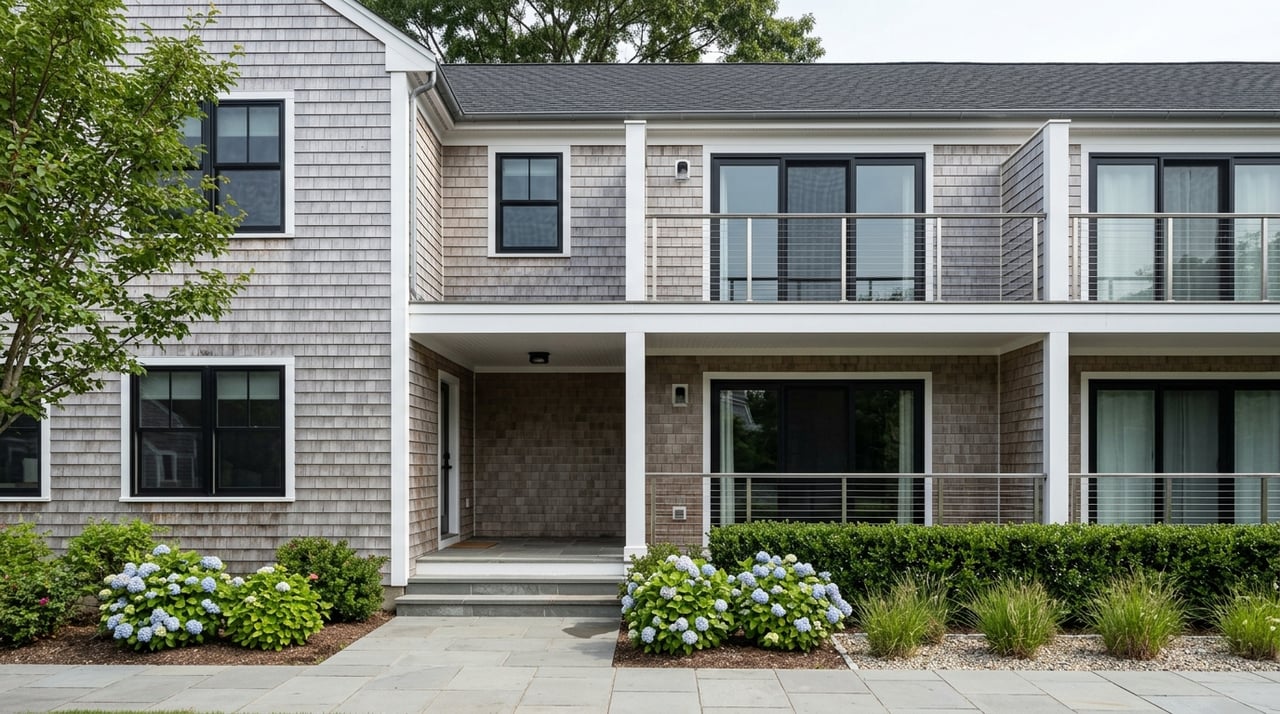
Westhampton Beach also has newer attached-home options that lean more townhouse than tower. One example is The Townes at Ketchaponack, a 37-townhome development marketed with a clubhouse, fitness facility, outdoor pool, and pickleball courts.
This matters because many buyers picture condo living as apartment-style only, when in this market it may also mean townhouse-style ownership with shared amenities. That can offer more space and a more residential feel while still keeping some maintenance responsibilities with the association.
A condo and a co-op may look similar from the outside, but the ownership structure is very different. That difference affects financing, approvals, monthly charges, and your due diligence process.
With a co-op, you do not purchase real property in the same way you do with a condo. According to the New York Attorney General, a co-op buyer purchases shares in a corporation, those shares are tied to a specific apartment, and ownership includes a long-term proprietary lease. Maintenance charges are typically based on the number of shares allocated to the unit.
By contrast, a condo generally involves direct ownership of the unit itself along with a shared interest in the common elements. In practical terms, buyers often find condos simpler to understand, while co-ops may involve more board oversight and building-specific rules.
One of the biggest mistakes buyers make is comparing only the headline HOA or maintenance number. In Westhampton Beach, what the fee includes can matter just as much as the amount itself.
Here are a few recent examples from local listings:
These examples make one point clear: waterfront location, amenities, and bundled expenses can change carrying costs dramatically, even when two units look similar on paper.
Condo and co-op living can reduce the amount of exterior maintenance you handle personally. That is one reason these properties appeal to second-home buyers, empty nesters, and anyone who wants a more convenient ownership experience.
Still, shared maintenance does not mean maintenance disappears. The New York Attorney General’s guidance on buying a co-op or condo and Fannie Mae’s project guidance both reinforce the importance of reviewing financials, rules, and project condition carefully. Shared projects can face reserve issues, repairs, or special assessments that affect all owners.
That is why it helps to look beyond the monthly fee and ask what is happening behind the scenes. A lower fee is not always the better value if a building is underfunded or facing large capital needs.
Financing for a condo or co-op is not always as straightforward as financing a single-family home. Your lender will look at your own qualifications, but the building or project may also need to pass a separate review.
For co-ops, Fannie Mae notes that co-op share loans are subject to project eligibility rules. For condos, lenders may closely review issues such as insurance, litigation, critical repairs, and project operations. In a resort market like Westhampton Beach, that matters because hotel-like daily or short-term rental activity can create financing hurdles.
It is also important to remember that a preapproval is not a final loan commitment. The Consumer Financial Protection Bureau explains that preapproval is a lender’s tentative statement that it is willing to lend under certain conditions, not a guarantee. In practice, you may need both personal loan approval and building-level approval before closing.
Some listings also note that complex-level approval is required. That is another reminder that the process can vary from one property to another, especially with co-ops.
Before you move forward on any condo or co-op in Westhampton Beach, focus on a few practical questions.
Ask whether the fee covers taxes, water, gas, cable, trash, snow removal, exterior maintenance, or other services. Two properties with very different fee numbers may be closer in true monthly cost than they first appear.
This affects how you own the property, how financing works, and what board review may be required. It also influences the documents your attorney and lender will need to review.
Check policies on pets, rentals, seasonal use, and approvals. Current listing information in this market shows meaningful variation, including different pet policies and approval requirements.
The New York Attorney General recommends reviewing offering plans, annual reports, board minutes, financial statements, bylaws, proprietary leases, and house rules where applicable. Those documents can tell you a great deal about the building’s finances, governance, and overall health.
This is a very local but important issue. Some Dune Road listings are marketed as Westhampton Beach while recording the city or township as Southampton. That means you should verify municipal jurisdiction, taxes, school district, and association documents instead of assuming every listing shares the same village details, as shown in this Dune Road listing example.
Westhampton Beach condo and co-op living is often best for buyers who see the purchase as both a lifestyle choice and a maintenance decision.
Empty nesters may appreciate elevator access, beach or pool amenities, and less exterior upkeep. Pied-à-terre buyers may prefer smaller village-center units with easy access to Main Street. Low-maintenance second-home buyers are often drawn to Dune Road communities with a more resort-oriented amenity package.
The right fit depends less on age or category and more on how you want to live. If you want convenience, shared amenities, and less hands-on maintenance, this segment of the market can be very appealing. If you want more autonomy and fewer shared rules, a detached home may feel like the better match.
Buying a condo or co-op in Westhampton Beach is rarely just about square footage. It is about understanding the building, the fee structure, the rules, and the lifestyle that comes with the address. If you want tailored guidance on local inventory, ownership trade-offs, or a second-home strategy, connect with Stoebe & Co. for founder-led insight and a high-touch local perspective.

Stoebe & Co. Real Estate is a premier, independently owned brokerage located in the prestigious Village of Westhampton Beach. With over $1 billion in sales, the firm has established itself as a leader across the primary, luxury, ultra-luxury, rental, and commercial markets. Our growth is the result of a deliberate approach to real estate — one defined by clarity, precision, and purpose.
July 23, 2026
July 16, 2026
July 9, 2026
July 2, 2026
June 25, 2026
June 18, 2026

June 11, 2026
June 4, 2026
May 28, 2026