
May 14, 2026
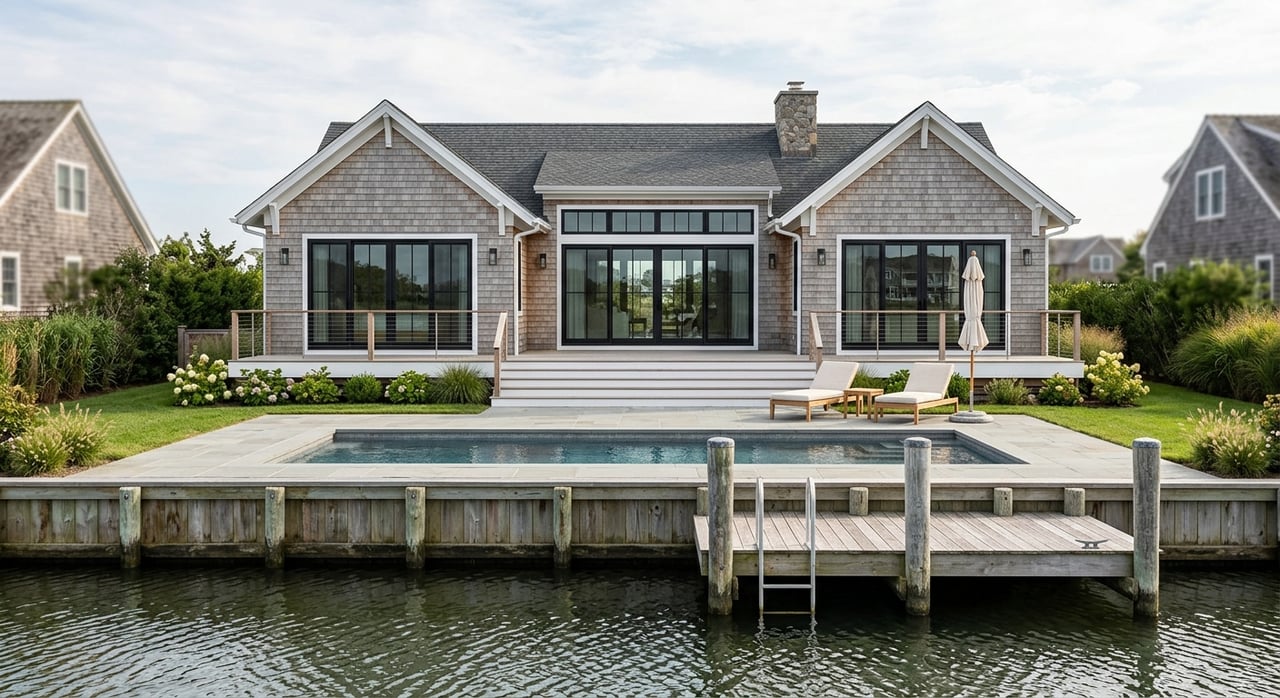
Water means very different things depending on where you stand in Quogue. On one street, it can mean protected boating and an easy launch. On another, it can mean wide bay views and breezy outdoor living. Closer to the ocean, it often means beach access, dune rules, and a daily connection to the shoreline. If you are trying to decide which waterfront setting fits your goals, understanding how canal, bay, and ocean living differ can save you time and sharpen your search. Let’s dive in.
Quogue is an incorporated village in the Town of Southampton, and village materials describe it as a water-oriented community surrounded on three sides by water and close to the ocean beach. The local map identifies the Quogue Canal, Quantuck Bay, Shinnecock Bay, and the Atlantic Ocean, which helps explain why waterfront living here is not a one-size-fits-all experience.
That geography creates three very different lifestyles. In practical terms, canal living tends to be the most boat-focused, bay living often balances views with usability, and ocean living centers on beach access and the barrier-beach setting. These are not formal zoning categories, but they are useful ways to compare how a property may actually live.
Quogue’s historic pattern adds another layer. Village materials note that properties south of Quogue Street are generally larger and closer to the ocean, while homes north of Quogue Street tend to be more modest. That difference can influence how spacious, seasonal, or water-oriented a property feels even before you step inside.
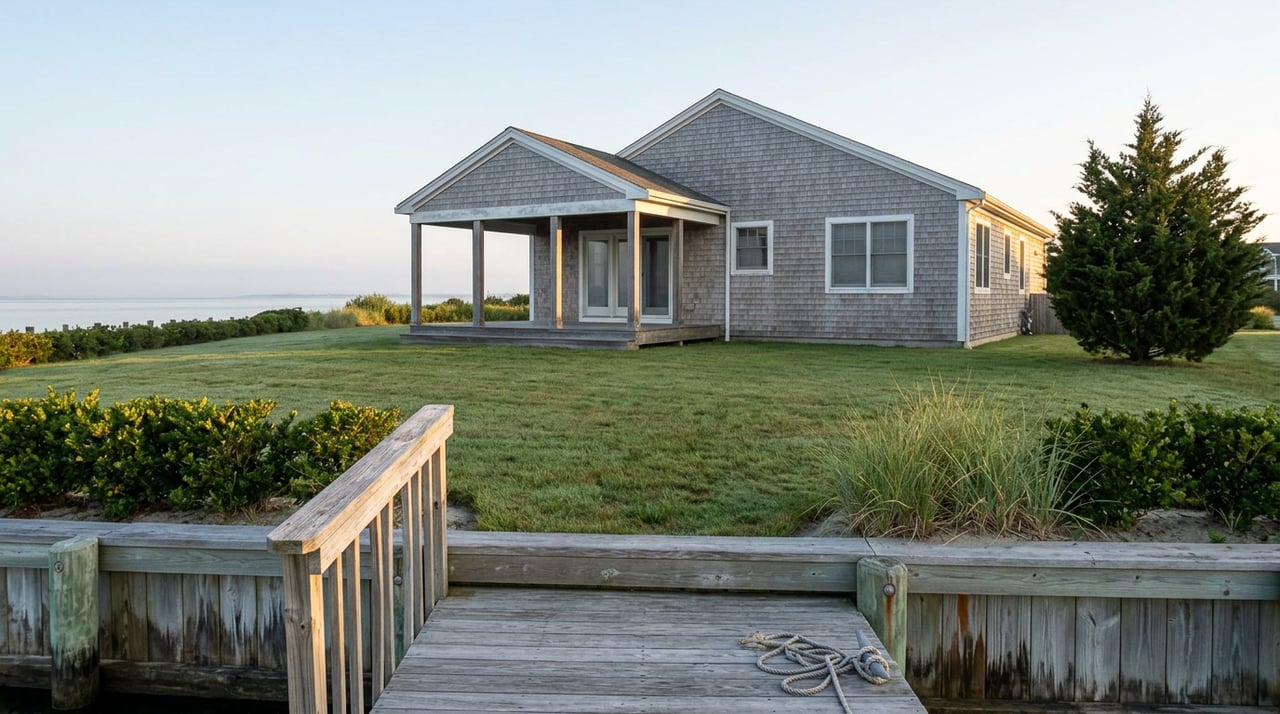
If your ideal day starts with stepping onto your dock and heading out on the water, canal-front living may be the clearest fit. In Quogue, the canal side is closely tied to practical boating use, and the village’s own dock is bounded by the Quogue Canal and Quantuck Bay.
The appeal here is usually function first. Canal properties often offer more protected mooring, quicker launch access, and less wave exposure than more open waterfront settings. If boating convenience matters more to you than broad open-water views, canal living can make a lot of sense.
Canal-front homes can still be scenic, but the experience is usually more intimate than expansive. You are often trading the widest panoramas for a more sheltered and usable waterfront edge.
For many buyers, that is a smart trade. A canal property may support a dock-centered routine more naturally than a lot that feels more exposed to wind or wave action. If you plan to use a boat regularly, that daily practicality matters.
In Quogue, a private boat slip or dock from a lot bounded by a body of water requires a Board of Trustees permit. The village also gives Quogue Canal a special bulkhead carve-out, but that exception does not automatically remove every approval issue, especially when an improvement is tied to a boat slip.
That means due diligence should start early. One of the most important buyer questions is whether the existing shoreline improvements already fit the village’s permit structure. You should also know that boat lifts and associated apparatus are treated as prohibited accessory structures in the zoning code, so you cannot assume a lift can be added later.
Bay-front and bay-proximate homes in Quogue sit on or near Quantuck Bay or Shinnecock Bay. This setting often lands in the middle of the waterfront spectrum: more open than a canal, usually less exposed than the ocean, and often well suited for both water access and outdoor entertaining.
For many buyers, that balance is the draw. Bay properties may offer broader views, brighter exposure, and a setting that supports kayaking, small-boat use, and relaxed time outside. If you want water as part of your everyday backdrop, but still want a practical side to the lot, the bay can be a compelling option.
Quogue does allow private boat slips and docks from lots bounded by water. The village code also states that a private boathouse without living quarters may be placed closer than 50 feet from the water with Board of Appeals authorization.
Walkways to a body of water can also be allowed without the usual water setback, as long as they are designed to minimize visual impact. In real-world terms, bay-front living can be highly usable, but the exact package of improvements depends on the lot and what approvals are already in place.
If canal living feels too narrow and ocean living feels too exposed, bay living may be the right compromise. It often suits buyers who want a broader water outlook than a canal can offer, while keeping a stronger boating component than many ocean-side properties provide.
That middle-ground appeal is especially helpful in Quogue, where lifestyle priorities vary widely. Some buyers want the water primarily as scenery. Others want to use it every weekend. Bay settings often speak to both priorities at once.
Ocean-proximate living in Quogue is shaped more by beach and dune rules than by docking. The village beach is on Dune Road, and village materials note that Quogue’s oceanfront runs about 14,000 linear feet.
If you are drawn to ocean living here, the choice is usually about beach access, views, and the feel of the barrier beach. In simple terms, ocean-side homes are generally the most beach-oriented and the least boat-oriented of the three settings.
Oceanfront ownership in Quogue comes with specific responsibilities. Owners must maintain sand fencing and comply with the village’s ocean beach management program.
The code also states that property on the south side of Dune Road that is burdened by an easement or right-of-way must maintain a stile, steps, or walkway over the dune. Dune walkways must be designed to minimize visual impact, which makes the physical setup of the lot an important part of the ownership experience.
Ocean living can deliver the strongest seaside identity in Quogue, but it also brings more exposure to erosion, wind, and flood-related planning than canal or many bay parcels. That does not make it better or worse. It simply means the ownership profile is different.
This is also where lot feel becomes especially important. Village materials note that properties south of Quogue Street are typically larger and closer to the ocean, which helps explain why many ocean-adjacent homes feel more spacious and more seasonal in character than inland village streets.
The cleanest way to compare Quogue waterfront property is lifestyle first and regulation second. Ask yourself how you expect to use the property most often, not just what looks best in photos.
A simple framework can help:
When you define your lifestyle first, the shortlist usually gets much clearer.
Once you know the setting that fits you best, focus on the lot itself. In Quogue, local rules can shape what you can keep, modify, or add.
Key questions include:
A beautiful water view matters, but so does how the property works on an ordinary day. Two homes may both be labeled waterfront, yet one may fit your routine far better than the other.
That is where local guidance becomes valuable. In a market like Quogue, the best match is often the property that aligns your lifestyle, the lot’s physical characteristics, and the village’s permit framework.
If you are considering canal, bay, or ocean living in Quogue, the right guidance can make the search feel much more precise. For tailored advice on buying, selling, seasonal rentals, or ongoing property stewardship in the Hamptons, connect with Stoebe & Co..

Stoebe & Co. Real Estate is a premier, independently owned brokerage located in the prestigious Village of Westhampton Beach. With over $1 billion in sales, the firm has established itself as a leader across the primary, luxury, ultra-luxury, rental, and commercial markets. Our growth is the result of a deliberate approach to real estate — one defined by clarity, precision, and purpose.
October 22, 2026
October 15, 2026
October 8, 2026
October 8, 2026
October 8, 2026
October 1, 2026
September 17, 2026
September 17, 2026

September 10, 2026