
April 16, 2026
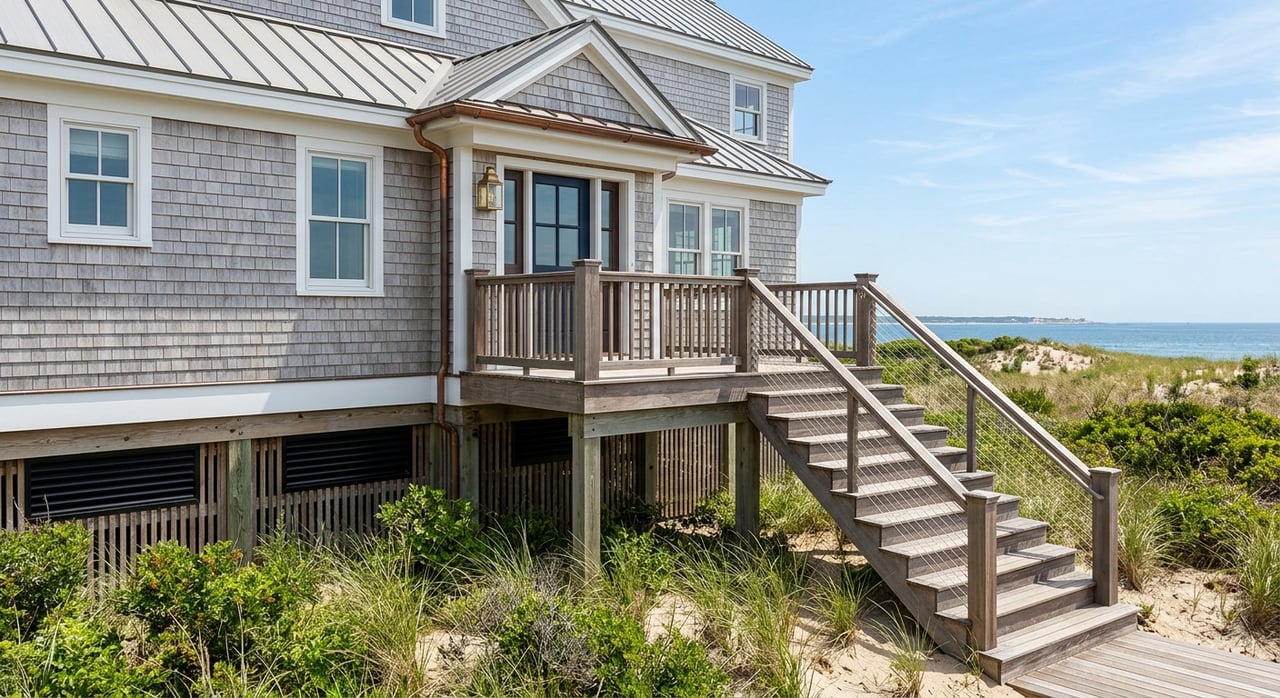
If you picture Dune Road as just another street address, you may be surprised by what daily life there actually feels like. This is a narrow barrier-beach corridor where water, access, weather, and permitting all shape the ownership experience in very real ways. If you are considering a home here, it helps to understand both the lifestyle and the logistics before you buy. Let’s dive in.
Living on Dune Road in Westhampton Beach usually feels more private and more tucked away than living on an inland village street. The road sits on a barrier beach, with water on both sides and access funneled through a limited network of roads, bridges, gates, and beach entry points, which creates a more secluded setting than many buyers expect.
That sense of privacy is a big part of the appeal. At the same time, the pace changes with the season. Summer, holiday weekends, and special events bring more activity, while the shoulder seasons tend to feel quieter and more relaxed.
Even though Dune Road can feel removed, Westhampton Beach still offers a village-centered lifestyle. According to the Village of Westhampton Beach, the marina sits in the heart of the village, the Farmers Market runs on Saturdays, and summer programming includes Monday-night movies, concerts on the Village Green, and seasonal events on the Great Lawn.
The same village information notes that the marina is about 0.3 mile from downtown and about 0.9 mile from Rogers Beach. That proximity matters because it means your lifestyle is not only about oceanfront or bayfront living. You are also close to the walkable village core that gives Westhampton Beach its year-round identity.
One of the most important things to know about Dune Road is that beach access is not one-size-fits-all. Access rules, parking, and permits can vary based on whether a property falls within village, town, or county beach systems.
The Village of Westhampton Beach states that Rogers Beach and Lashley Beach are the main village beaches. Parking stickers are required from May 1 through October 1. Rogers Beach includes lifeguards, restrooms, a concession stand, indoor and outdoor showers, and picnic tables, while Lashley Beach offers a smaller setup with lifeguards, restrooms, and a shower.
Southampton Town operates separate beach access. The town lists Pikes Beach at 769 Dune Road, and town permits apply only to town beaches, not village or county facilities. Town materials also note that beach parking permits are required at town recreation facilities from May 15 through September 15, and daily parking is available through the Passport app at Pikes Beach.
At the far western end, Cupsogue Beach County Park is the county option. Suffolk County describes it as a 296-acre barrier-beach park at 975 Dune Road, with lifeguard-supervised swimming, fishing, camping, RV access along the outer-beach access road, restrooms, and food concession service.
Dune Road offers a unique coastal setting, but traffic patterns can shift quickly in peak season. Beach demand, holiday activity, and weather all influence how easy it is to move around.
For example, the village has posted July 4 traffic closure notices restricting movement from Dune Road into the village during event windows. Southampton Town has also issued alerts about Dune Road flooding and possible closures, which is a reminder that coastal access can change based on conditions as much as calendars.
If you are buying here, it helps to think in terms of seasonal rhythm rather than static convenience. Off-season travel may feel simple and quiet, while peak summer weekends may require more planning.
If beach driving matters to your lifestyle, you will want to review local rules closely. The village code states that vehicles may enter and exit the ocean beach area only from the village access road south of Dune Road just east of Lashley Lane, and only when the gate is open.
The same Village Code provisions set a 10 mph speed limit on the beach and limit beach driving to permitted vehicles. For some buyers, that is a useful lifestyle feature. For others, it simply highlights how regulated coastal access can be on Dune Road.
Flood risk is one of the biggest practical considerations on Dune Road. Suffolk County’s hazard mitigation annex states that the southern third of the Village, including Dune Road, is vulnerable to flooding, and it notes that elevation or reconstruction in conformance with current FEMA standards is common.
The same county document also says some areas on the south side of Dune Road do not have an adjacent AE zone to the VE zone, and that new homes are often built as if they are already in a flood zone in anticipation of future map changes. It also notes a strict 75-foot rear-yard setback to the crest of the dune on the south side of Dune Road and states that dwellings are not permitted to be more than two stories.
Before you buy, it is smart to review the parcel-specific flood designation through FEMA’s Flood Map Service Center. FEMA identifies A, AE, V, and VE zones as special flood hazard areas, and flood insurance is required for federally regulated or federally backed loans on properties in those areas.
Flood insurance is not an afterthought on Dune Road. Suffolk County recommends that residents purchase flood insurance, especially in storm surge zones, which reinforces how central risk planning is to ownership in this setting.
Westhampton Beach is also actively focused on coastal resilience. The village’s Local Waterfront Revitalization Project addresses flooding and erosion management, stormwater management, groundwater recharge, coastal zoning, and related waterfront issues.
For buyers, that means two things. First, you should evaluate a property with both lifestyle and resilience in mind. Second, local planning around the shoreline is ongoing, and that broader context matters when you compare Dune Road to more inland options.
Dune Road ownership comes with more administrative detail than many second-home buyers expect. According to the village service and permit information, any transfer of title requires an updated Certificate of Occupancy.
The village also states that house rentals from May through September require a permit. Construction hours are limited, and there is no Sunday construction in July and August. These rules do not make ownership less appealing, but they do make it more important to understand the compliance side before you close.
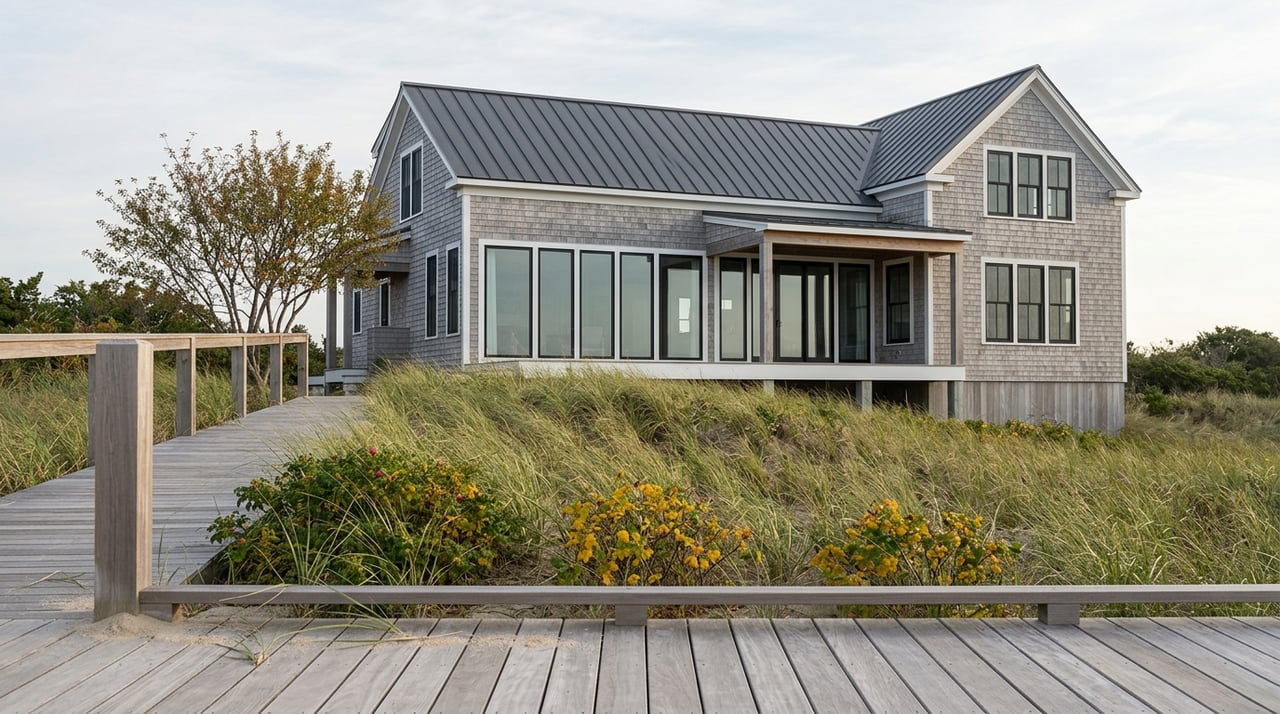
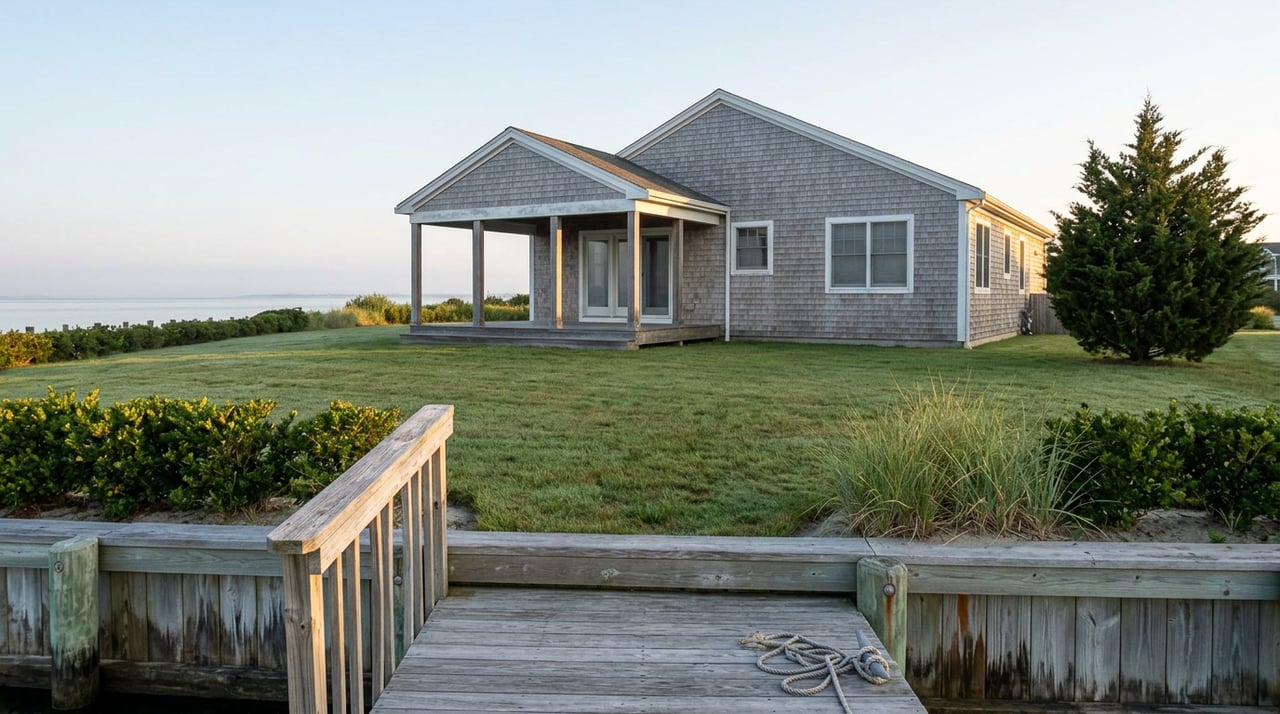
Architecturally, Dune Road is not uniform. The housing stock spans historic shingle-style cottages and larger older homes, along with postmodern and contemporary residences and newer modern builds designed around coastal conditions.
Research cited in local reporting and design sources points to everything from early 20th-century shingle-style homes to modest original beach cottages and newly built multi-level residences with elevators, pools, cabanas, and water-focused layouts. In many newer homes, the design reflects barrier-island living, with elevated living spaces, large windows, and a stronger emphasis on views, privacy, and outdoor space.
That variety is one reason Dune Road appeals to different buyer profiles. Some buyers want the character of an older coastal home, while others are looking for a more modern property built with current flood-conscious design in mind.
If you plan to renovate, expand, or build, design review is another important part of the process. The village’s Architectural Review Board reviews building permits for new construction, additions, alterations, accessory structures, fences, decks, swimming pools, tennis courts, and sign permits.
That means changes to a property may involve a more layered review process than you would see in a typical inland setting. For many buyers, that is part of what helps maintain visual character along the corridor. Still, it is wise to factor review timelines and approval requirements into your plans.
In practical terms, living on Dune Road in Westhampton Beach means balancing beauty with logistics. You get a striking coastal setting, a private-feeling barrier-road environment, and access to a village known for beaches, marinas, Main Street, and seasonal events.
You also need to be prepared for permit systems, structured beach access, weather-related disruptions, flood-zone due diligence, and a more hands-on ownership experience. For the right buyer, that mix is exactly the point. Dune Road is less about simple beach living and more about informed coastal ownership.
If you are weighing whether Dune Road fits your goals, working with a local brokerage that understands the details can make the process much smoother. The team at Stoebe & Co. offers founder-led local guidance for Westhampton Beach buyers, sellers, seasonal owners, and clients looking for a more informed path into coastal ownership.

Stoebe & Co. Real Estate is a premier, independently owned brokerage located in the prestigious Village of Westhampton Beach. With over $1 billion in sales, the firm has established itself as a leader across the primary, luxury, ultra-luxury, rental, and commercial markets. Our growth is the result of a deliberate approach to real estate — one defined by clarity, precision, and purpose.
October 22, 2026
October 15, 2026
October 8, 2026
October 8, 2026
October 8, 2026
October 1, 2026
September 17, 2026
September 17, 2026

September 10, 2026