
February 26, 2026
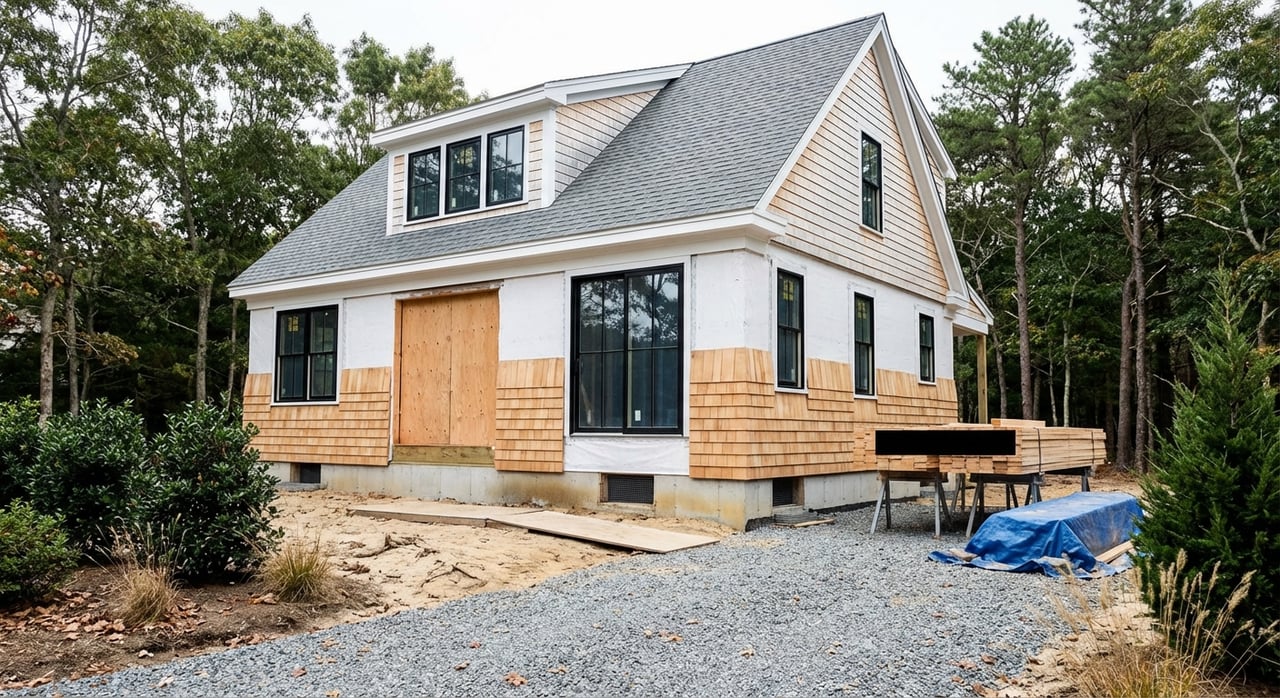
Thinking about taking down an older cottage or starting fresh with a new build in Hampton Bays? The choice is exciting, but your plan will live or die by zoning, wetlands, flood elevation, and septic rules. You want a clear path, realistic numbers, and a timeline that does not drift. This guide breaks down the steps, approvals, costs, and common pitfalls so you can move forward with confidence in Hampton Bays. Let’s dive in.
Quick take: Before you sign or start design, run the parcel through the Town’s zoning tools, screen for wetlands and flood, and confirm septic requirements with Suffolk County. These three checks decide most teardown vs. rebuild economics in Hampton Bays.
Your first move is simple and powerful. Order a current boundary survey and confirm the property’s Suffolk County Tax Map (SCTM) number. With that in hand, you can check your zoning district, overlays, setbacks, and lot coverage.
Southampton’s zoning code sets the rules for height, setbacks, lot coverage, and use. Hampton Bays also includes hamlet center strategies and some mixed-use or planned districts that come with extra review. For the code’s structure and references to site plan and planned development procedures, see the Town’s zoning code on eCode360.
Hampton Bays mixes bays, inlets, and low-lying parcels. That coastal setting brings extra review and design standards.
If your lot is on or near a wetland, you will likely need permits from New York State and the Town. The state’s tidal wetlands program requires you to identify wetland boundaries and avoid or minimize impacts. Docks, bulkheads, driveways, pools, septic systems, and additions inside mapped wetlands or buffers trigger review. Learn the basics of state permitting in the NYSDEC tidal wetlands program. The Town also has local wetland buffers and clearing limits you must check within its zoning code.
Tip: Hire a surveyor and wetland specialist early. Wetland flagging and a simple feasibility plan can save months later.
Many Hampton Bays parcels sit in FEMA Special Flood Hazard Areas. If your lot is in AE or VE zones, design will likely require elevated foundations, flood vents, and specific wind and structural standards. Start by confirming your map status through FEMA’s Flood Map Service Center. For new homes, the Town requires a Determination of Potential for Flooding before you apply for a building permit, and you may need an elevation certificate to close out a certificate of occupancy.
If you believe a flood map is inaccurate for your specific parcel, a surveyor or engineer can help pursue a FEMA Letter of Map Amendment or Revision.
Southampton has been working on waterfront and water-protection policies that may affect shoreline work and standards. If you are planning bulkheads, dredging, or extensive shoreline improvements, watch Town Board actions and policy updates during design.
Much of Southampton, including Hampton Bays, remains unsewered, but the Town has been studying sewer-district formation. Sewer service can change what is buildable and how you size or design on-site systems. Check current project scope and timing on the Town’s Hampton Bays Sewer Planning page to see if your block is affected.
Suffolk County has advanced sanitary code changes that promote or require nitrogen-reducing innovative/alternative on-site wastewater treatment systems for many new builds and replacements. Expect higher up-front cost, a longer approval track, and ongoing operation and maintenance for these systems compared to a basic cesspool. Read the County’s summary of recent changes here: Suffolk Health Officials Advance Sanitary Code Changes.
Every site is different, but the path below fits most Hampton Bays teardowns that become new single-family homes.
Demolition costs vary by size, access, abatement needs, and disposal fees. National guidance puts small, simple teardowns in the 3,000 to 15,000 dollar range, with full foundation removal commonly 10,000 to 25,000 dollars or more. See typical ranges in this demolition cost overview. Get two to three local bids for accuracy.
Build costs on the East End run above national averages due to coastal foundations, higher finish standards, and logistics. Recent coverage reports premium custom construction in the Hamptons at roughly 900 dollars per square foot and higher for ultra-premium work, with simpler builds costing materially less. Use line-item quotes from local builders for your specific site and finishes. For market context, review this summary on the cost to build a custom home in the Hamptons.
Expect reassessment after demolition and new construction. The Assessor’s office is notified through the permit process, including demolition paperwork. Ask about timing so you understand when a new assessment may affect your tax bill.
New construction has shaped Hamptons pricing for years. Broker and appraiser reporting shows new and luxury inventory driving median and high-end values, with the strongest premiums on waterfront and oceanfront parcels. If resale value matters, align your design and finish level with recent local new builds. See trends in the Elliman Report for Hamptons Sales.
For a smooth teardown-to-new-build, assemble a local team early.
A strong team keeps your design aligned with code and your budget grounded in reality.
Ready to weigh renovation versus teardown versus building new? Let’s talk through your goals, budget, and the approvals you will need so you can plan with confidence in Hampton Bays. Connect with Stoebe & Co. for thoughtful guidance and introductions to trusted local pros.

Stoebe & Co. Real Estate is a premier, independently owned brokerage located in the prestigious Village of Westhampton Beach. With over $1 billion in sales, the firm has established itself as a leader across the primary, luxury, ultra-luxury, rental, and commercial markets. Our growth is the result of a deliberate approach to real estate — one defined by clarity, precision, and purpose.
July 23, 2026
July 16, 2026
July 9, 2026
July 2, 2026
June 25, 2026
June 18, 2026
June 11, 2026
June 4, 2026
May 28, 2026